Showing posts with label injury. Show all posts
Tuesday, July 8, 2014
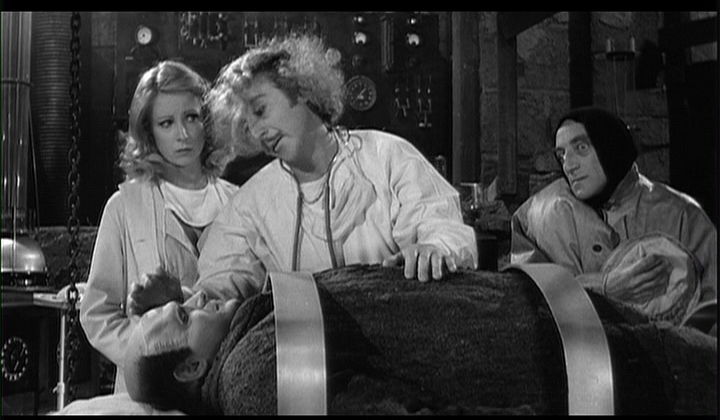
Recovery Day 24: Scared Shirtless
Well, maybe "shirtless" wasn't exactly the word I was looking for. But I wanted to maintain my PG rating.
As an aside: what on earth are " ... some thematic elements"? Well, it turns out that there is actually a Motion Picture Association of America definition of Thematic Elements
Anyway ...
Late last week, I had a negative and scary follow-up visit with a specialist cardiologist. He went over all of my recent medical records, and especially the report from my catheterization procedure of June 14. What I understand is that the doctor who implanted the stent in my right coronary artery also basically took a look around the other arteries of my heart while he was in there via angiogram. Apparently he saw and noted several more blockages in my coronary arteries, which is in itself depressing. But worst of all, he noted that one of those blockages (estimated at 40%) gives me a terrifying double-whammy: it's located in a spot that can't be fixed with a stent (main coronary artery), and if a clot forms there I'm a goner within minutes - because it's the main artery that feeds most of my heart. They call this a Widow Maker. Insert intense and loud curse words here.
He told me that I will need open heart surgery and at least a double bypass surgery "soon". I will be getting a second opinion of course, but I suspect that this is simply my reality now.
From his perspective, I might be able to run again, but only at low intensity and for short periods of time. He also said I'd probably never run a race again. I will confess that looking forward to specific races has been an integral part of what I've relied on to feel happy for over three decades. Thus, I need to re-configure my life quite a bit now, especially to come up with other things to look forward to, which seems so easy to type here but at the same time feels so challenging. Should that embarrass me? Perhaps. Running has been such a steady companion through all of the ups and downs of my adult life, maybe I came to rely on it too much. My challenge will be to reformulate my coping strategies and keep moving forward.
I'm a bit depressed. I would imagine plenty of you are familiar with that feeling. I think ever since I reached age 40 I've been joking with my peers about how it sucks to get old, but now it's not really much of a joke anymore is it? What matters most now is sticking around awhile to be here for my wife, my children, my family. Certainly that's more important than even the most-awesome race in the universe.
Meanwhile, I continue to do cardiac rehab 2-3 times per week and some easy cycling in between. I'm getting outside and feeling the air on my face. For example, I managed to get out on my road bike this morning for about 12 miles at a fairly easy cadence, keeping my heart rate down under 110 bpm. What's hard for me is the inevitable comparison to what I used to be able to do. Psychologically, I need to move away from "I used to be so much faster" to "man, am I glad to be here and to be able to smell the damn roses".
If you are facing challenges in your life (and really who doesn't face challenges?), I hope you will join me in determination to defeat defeatism.
Wednesday, October 23, 2013
Is It Really October Already?
Whoa, 2013, slow down a bit please! Can't believe how fast this year has sprinted along. Does it seem that way to you, too? I feel like I barely have time to catch my breath, and never seem to find a moment to write anything coherent on this blog. I smell a 2014 New Year's Resolution brewing ...
Halloween is nearly upon us, and the racing season - at least here in the northern plains - is winding down. Oh, sure, we've got a smattering of Turkey Trots and Christmas Jogs on the calendar, but trail racing is just about done for the year and that's where I find the most pleasure and satisfaction.
I will be racing at the Great Pumpkin Chase 10k this coming weekend. It's the final race in the 2013 UMTR Trail Race Grand Prix Series. I've really enjoyed the races in this series over the past year, and - unlike last year - managed to stay uninjured and thus hang in there consistently enough to take home the top prize in my age group AND OVERALL. Have to be happy with that! There is a potluck gathering a awards ceremony coming up next month (Potluck! You've got to love the Midwest sometimes).
On staying injury-free: Really, I'm just talking about major break downs, because I've had my share of sore spots and nagging little stuff, like ITB tightness, piriformis twitches, and an intermittent odd pain in my left ankle. Still, I've managed to run at least a few times every week for most of the year. The rest of the days I'm either cycling pretty hard or whirling around on my elliptical in the basement, nose pressed into Netflix on the iPad. I'm going to go on record to say that the elliptical was a good purchase for me as an "older runner". Even though I much prefer being outside (regardless of the elements), the ability to eliminate most of the injury-inducing impact of gravity while still getting a quality and similar-motion-to-running workout has been really valuable. And thank goodness for lots of (mostly old and bad, but what the heck) Sci Fi stuff on Netflix! I've found that I can do a pretty good set of intervals by finding old shows/films with plenty of chase scenes, just a tip. Oh, and comedies are no good for me - I can't workout and laugh at the same time!
I hope you are prepared for winter, and plan to stay fit and active regardless of the season. I'll be back at some point with a complete recap of 2013 and look ahead to 2014. Keep running!
Labels:
2013,
elliptical,
Great Pumpkin Chase,
halloween,
injury,
intervals,
ipad,
ITB,
netflix,
piriformis syndrome,
potluck,
running,
Running injuries,
trail race,
UMTR
Wednesday, July 24, 2013
A Pain in the Knee
Recently I've had a few runner friends contact me to ask about pain in their knees. It's a pretty common complaint, especially for any runner who is ramping up his or her training by increasing frequency, mileage, intensity, etc. As the autumn marathon season approaches, this includes a rather large percentage of runners out there.
![]() |
| Ow! |

In other words, it's probably a classic case of "runner's knee", which isn't serious but could set you back for a time. And runners do not like being set back!
Caveat 1. I've written it before and I always mean it - I'm NOT a doctor, not even close. I am a runner of many years who's seen a lot - and personally experienced a lot - of injuries. I've coached and supported hundreds of fellow runners, and my home-spun advice has seemed to work in the past, but it may not work at all for you. Really. So promise me that if the pain gets worse (or the knee becomes discolored or swollen or you really can't bend it without wincing), please ignore my advice and go see a real physician.
![]() |
| There, there ... |
In the meantime, try this:
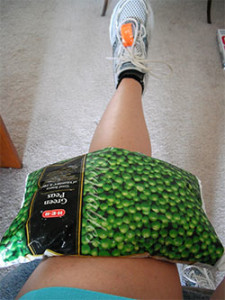
1. Ice your knee, 2 to 4 times per day, for 20-30 minutes each time. Do this for one week. Ice wraps are great, so are ziploc bags full of ice cubes. The old runner's trick is to buy a cheap bag of frozen peas and just use it over and over (but I don't recommend eating them later, yuck - so mark the bag with permanent ink just to be sure).

2. Take at least 48 hours off of running, walking fast, cycling, or other leg-intensive exercise. After two days, cycling might be your best bet as cross-training. You may need to take up to two weeks away from running (let pain be your guide here, if it hurts don't do it).
3. Go to your favorite natural vitamin store and buy some Bromelain in pill form. This is a natural substance from pineapple that helps to reduce inflammation. Take 2-4 of the pills per day for 1- 2 weeks, then re-evaluate based on pain. Please don't take the stuff year-round, of course, it's for treatment not maintenance.
4. Strengthen your quadriceps. Do the exercise shown at the very end of this Runner's World article .
You can also do simple leg lifts (just straighten your leg and hold it for a count of five, 10 times in a row, a few times per day) when seated at your chair at work. The key is to work your quadriceps - when they get stronger your knee cap will track in the appropriate plane and the pain should go away. This is the most-important thing you will need to do, so be diligent about it. You are a runner, diligence should be part of your middle name!
5. Runner's World also has a short video that demonstrates several exercises that can help runners prevent knee pain. Some of these may seem almost silly, but taken as a combined set they essentially create strength in several muscles which can then take some of the strain away from the knee area. Well worth a try.
Be patient, work those quads, and you will get back out there quickly. If you ignore the pain and refuse to stop running (try to "run through" this injury), I predict that it's going to set you back even longer in the near future. Yeah, I know you hate to hear that, but truth hurts sometimes. What's the old adage? An ounce of prevention is worth a pound of cure? That's similar to the case here: when runner's knee arises, quickly nip the injury in the bud or suffer with a very long layoff and possibly lots of appointments with doctors and physical therapists.
Good luck!
Labels:
bromelain,
chrondomalacia patella,
cure,
ice,
injuries,
injury,
knee,
knee pain,
pain,
patella,
quadriceps,
recovery,
runner's knee,
running,
treatment
Tuesday, August 18, 2009
Frequency
In a previous post, I outlined the four basic principles of endurance training:
1. Frequency
2. Duration
3. Intensity
4. Periodization
Today, I'd like to spend some time discussing Frequency.
On it's surface, the concept of frequency seems rather simple. It's just the number of times that you train during any given period of time. We runners typically speak in terms of days per week, but elite runners will likely talk about sessions or runs per week. For example, when I was younger and fit (and brash and foolish), I would train 8-10 times per week. That would include 8 or 9 runs, plus a bit of cycling or swimming. Of course, that meant that I was training more than once per day on a few days each week, thus the need to talk about frequency in terms of sessions per week.
Frequency is the baseline measurement for endurance training. You can't build any endurance at all without at least a moderate frequency of training sessions. Once per month won't do it, even if you think you can force yourself to do some kind of incredibly hard workout. The stress-response cycle that I have discussed here simply needs repetition in order to be effective.
To build your training program, you begin by holding both duration and intensity at a specific level, and work only on frequency. There is no exact formula for how to build up frequency, nor is there a perfect rule for the number of training sessions per week. Your experience will likely be your guide (but having an experienced coach would be the best approach). Even without specific instructions, the rule of thumb is to build any kind of training slowly and gradually. Let's get specific.
I am currently not running at all, as I work with doctors to correct and heal my injury. My frequency is zero sessions per week. When I begin running again, I will probably start by doing some very low-intensity, short-duration runs 2-3 times the first week (I anticipate running about 2-3 miles at (8:30 to 9:00 per mile pace). Assuming those go well, I will then proceed to add one more session per week, each week or two, until I'm up to six sessions per week. Full disclosure: for me, I'll probably aim to run 4-5 times per week, and cross-train (cycle or swim) once or twice per week. This formula should work for me, in part because it is based on my 31 years of consistent running (that is, I should bounce back fairly quickly). In contrast, if you are just beginning a running program for the first time, I'd recommend starting with only 1-2 sessions per week (even shorter and slower than me), and changing the frequency much more slowly, perhaps by adding one session only after keeping frequency steady for 3-4 weeks. Please note that neither I nor the hypothetical beginner will change the duration or intensity of our runs during this early build-up phase. We will keep our runs at low-intensity and short duration while we work solely on increasing frequency.
But how frequent is "frequent enough"? I wish I had a simple answer. It depends in part on your goals, and in part on your body's capacity to adapt to a training load. If your goals are based purely on losing some weight and pleasing your physician, one session every two days is probably adequate for your base frequency. If your goals are to run races up to and including the marathon, you are simply going to need to set your frequency at 6-7 sessions per week, with at least 5 of those as running workouts (the others can be cross-training). If you are looking to win your state championship, or aiming even higher, then you are going to need the dedication and capacity to train more than 7 times per week. Whatever your goals, your first step is to set your frequency at the level you need, before changing anything else in your training.
Frequency is the foundation. Next up, we'll talk about how to make changes in duration, building upon the groundwork of your frequency.
1. Frequency
2. Duration
3. Intensity
4. Periodization
Today, I'd like to spend some time discussing Frequency.
On it's surface, the concept of frequency seems rather simple. It's just the number of times that you train during any given period of time. We runners typically speak in terms of days per week, but elite runners will likely talk about sessions or runs per week. For example, when I was younger and fit (and brash and foolish), I would train 8-10 times per week. That would include 8 or 9 runs, plus a bit of cycling or swimming. Of course, that meant that I was training more than once per day on a few days each week, thus the need to talk about frequency in terms of sessions per week.
Frequency is the baseline measurement for endurance training. You can't build any endurance at all without at least a moderate frequency of training sessions. Once per month won't do it, even if you think you can force yourself to do some kind of incredibly hard workout. The stress-response cycle that I have discussed here simply needs repetition in order to be effective.
To build your training program, you begin by holding both duration and intensity at a specific level, and work only on frequency. There is no exact formula for how to build up frequency, nor is there a perfect rule for the number of training sessions per week. Your experience will likely be your guide (but having an experienced coach would be the best approach). Even without specific instructions, the rule of thumb is to build any kind of training slowly and gradually. Let's get specific.
I am currently not running at all, as I work with doctors to correct and heal my injury. My frequency is zero sessions per week. When I begin running again, I will probably start by doing some very low-intensity, short-duration runs 2-3 times the first week (I anticipate running about 2-3 miles at (8:30 to 9:00 per mile pace). Assuming those go well, I will then proceed to add one more session per week, each week or two, until I'm up to six sessions per week. Full disclosure: for me, I'll probably aim to run 4-5 times per week, and cross-train (cycle or swim) once or twice per week. This formula should work for me, in part because it is based on my 31 years of consistent running (that is, I should bounce back fairly quickly). In contrast, if you are just beginning a running program for the first time, I'd recommend starting with only 1-2 sessions per week (even shorter and slower than me), and changing the frequency much more slowly, perhaps by adding one session only after keeping frequency steady for 3-4 weeks. Please note that neither I nor the hypothetical beginner will change the duration or intensity of our runs during this early build-up phase. We will keep our runs at low-intensity and short duration while we work solely on increasing frequency.
But how frequent is "frequent enough"? I wish I had a simple answer. It depends in part on your goals, and in part on your body's capacity to adapt to a training load. If your goals are based purely on losing some weight and pleasing your physician, one session every two days is probably adequate for your base frequency. If your goals are to run races up to and including the marathon, you are simply going to need to set your frequency at 6-7 sessions per week, with at least 5 of those as running workouts (the others can be cross-training). If you are looking to win your state championship, or aiming even higher, then you are going to need the dedication and capacity to train more than 7 times per week. Whatever your goals, your first step is to set your frequency at the level you need, before changing anything else in your training.
Frequency is the foundation. Next up, we'll talk about how to make changes in duration, building upon the groundwork of your frequency.
Thursday, July 23, 2009
2009 is not my year
On the advice of the doc and the physical therapist, I tried my first tiny bit of "light jogging" last night. It was a complete and abysmal failure. The first three minutes hurt, but I can stand pain. Then the next two minutes hurt a lot, which made me start to worry. At that point (and remember we are talking only 5 minutes of jogging here) everything in my left hip and thigh just seemed to seize up completely. I am experienced enough to know the difference between pain that I can run through and pain that is telling me, "Hey you, stop, right now, and I mean it!"
So I walked back home, slowly. Sigh.
The pessimistic view would be that I'm just not going to come back from this latest injury. It's not healing, even with medical intervention. I'm done.
The optimistic view would be that it's just a little too early for me to try jogging. The piriformis is still not settled down, and perhaps there are still some underlying issues with my balance and alignment that need to be addressed before I can run again. I am simply not yet healed.
I prefer to be an optimist, but I will admit it's getting harder and harder to maintain that perspective.
I think what I'm going to do for now is limit myself to cycling for the next few weeks. I've used the bike to help bring myself back from injuries a few times before, so I'm hoping that it's going to be an effective method once more.
The bottom line is that I'm not going to be running the races I'd hoped to in August and September (the NYRR Club Team Champs, and the Reach the Beach Relay in New Hampshire, along with a couple of trail races). I feel pretty lousy about this. It's been a depressing summer in terms of running, and I'm not convinced that much is going to change this fall. I am going to take the pressure off completely, and not even think about racing for the rest of this year. I have to face the fact that I'm not even anywhere near jogging at this point, much less being able to run hard in competition.
I guess that 2009 was simply not my year for running, and I should just stop worrying about it.
Yeah, right.
So I walked back home, slowly. Sigh.
The pessimistic view would be that I'm just not going to come back from this latest injury. It's not healing, even with medical intervention. I'm done.
The optimistic view would be that it's just a little too early for me to try jogging. The piriformis is still not settled down, and perhaps there are still some underlying issues with my balance and alignment that need to be addressed before I can run again. I am simply not yet healed.
I prefer to be an optimist, but I will admit it's getting harder and harder to maintain that perspective.
I think what I'm going to do for now is limit myself to cycling for the next few weeks. I've used the bike to help bring myself back from injuries a few times before, so I'm hoping that it's going to be an effective method once more.
The bottom line is that I'm not going to be running the races I'd hoped to in August and September (the NYRR Club Team Champs, and the Reach the Beach Relay in New Hampshire, along with a couple of trail races). I feel pretty lousy about this. It's been a depressing summer in terms of running, and I'm not convinced that much is going to change this fall. I am going to take the pressure off completely, and not even think about racing for the rest of this year. I have to face the fact that I'm not even anywhere near jogging at this point, much less being able to run hard in competition.
I guess that 2009 was simply not my year for running, and I should just stop worrying about it.
Yeah, right.
Wednesday, July 15, 2009
The Needle
I've just returned from the Physiatrist's office, where two things happened:
(1) he did a nerve conductance test to verify the exact placement of the injured, inflamed muscle
(2) he shot me up three times with cortisone and marcaine, right into the piriformis muscle on my left side.
I have these comments about each:
(1) Apparently, when the piriformis was put into a stretch (rather uncomfortable), the nerve response was nearly zero. The thing is in spasm and swollen so badly that it's almost shutting down my sciatic nerve on the left side. It's a wonder I don't just fall over when I try to walk on my left leg.
(2) Ouch. Ouch ouch ouch. Did I mention ouch? Picture this: I'm curled up in a near-fetal position in my underwear, and the Dr. is inserting this big 5 inch long horse needle into my hip, to deliver the meds right to the injury. I'm sweating bullets and trying just to breathe. He tells me midway through that I'm "doing well", but what he can't see is that I've begun to grind my teeth into small bits, my eyes are beginning to pop out, and I have a miniature version of Niagara Falls made of perspiration running down my back. When he would actually hit upon the injured muscle with the tip of the needle, it would sort of "snap" in a painful reaction. Man, eye-watering pain ... luckily only for a few seconds.
Now, take all of that, and multiply it by three.
My advice if you ever get this shot: do not, under any circumstances, actually look at the needle. Trust me.
The plan:
I start physical therapy later this week, and hope that I can learn some new stretches and/or strengthening exercises to get this thing under control and then keep it that way. The Doc said I could start running very slowly and gingerly in "about a week", depending on what the Physical Therapist said. However, he said my first runs should be only 1-2 miles long. Ahem. That's not really a "run", but what the heck, I must not complain at all if this is getting me back to running, even if on an extended timetable.
My summer is a complete wash anyway in terms of running. Once again, I now attempt a comeback. When you get to be my age, you look back at your running career and realize that it's really just a long series of comebacks!
But, you know what they say, there is no shame in falling down, only in not getting back up again.
(1) he did a nerve conductance test to verify the exact placement of the injured, inflamed muscle
(2) he shot me up three times with cortisone and marcaine, right into the piriformis muscle on my left side.
I have these comments about each:
(1) Apparently, when the piriformis was put into a stretch (rather uncomfortable), the nerve response was nearly zero. The thing is in spasm and swollen so badly that it's almost shutting down my sciatic nerve on the left side. It's a wonder I don't just fall over when I try to walk on my left leg.
(2) Ouch. Ouch ouch ouch. Did I mention ouch? Picture this: I'm curled up in a near-fetal position in my underwear, and the Dr. is inserting this big 5 inch long horse needle into my hip, to deliver the meds right to the injury. I'm sweating bullets and trying just to breathe. He tells me midway through that I'm "doing well", but what he can't see is that I've begun to grind my teeth into small bits, my eyes are beginning to pop out, and I have a miniature version of Niagara Falls made of perspiration running down my back. When he would actually hit upon the injured muscle with the tip of the needle, it would sort of "snap" in a painful reaction. Man, eye-watering pain ... luckily only for a few seconds.
Now, take all of that, and multiply it by three.
My advice if you ever get this shot: do not, under any circumstances, actually look at the needle. Trust me.
The plan:
I start physical therapy later this week, and hope that I can learn some new stretches and/or strengthening exercises to get this thing under control and then keep it that way. The Doc said I could start running very slowly and gingerly in "about a week", depending on what the Physical Therapist said. However, he said my first runs should be only 1-2 miles long. Ahem. That's not really a "run", but what the heck, I must not complain at all if this is getting me back to running, even if on an extended timetable.
My summer is a complete wash anyway in terms of running. Once again, I now attempt a comeback. When you get to be my age, you look back at your running career and realize that it's really just a long series of comebacks!
But, you know what they say, there is no shame in falling down, only in not getting back up again.
Monday, July 13, 2009
Back to the drawing board
Sorry, dear readers, I have been off the grid for some time. This is due to a combination of things: (1) injured, so not running still, (2) stress at work, (3) two weeks vacation in the gloriously unpopulated woods of northern Wisconsin.
My summer of 2009 has been without running so far, which is horribly depressing. Just before I departed for my vacation, I saw a recommended "Physiatrist", who diagnosed my problem as piriformis syndrome. That label scares the heck out of me, because my best friend had his running career essentially ended because of piriformis problems. Not good. Now that I'm back at home, I'll go to a follow-up appointment this week and undergo whatever aggressive treatments they recommend (I assume this will include an injection of cortisone/lidocaine to the muscle itself, followed by physical therapy). If all goes well, I might be back to running in 2-4 weeks. If all does not go well ... who knows?
It sucks not to be running, I'm sure you'll all agree. What's ironic is that when I'm running well, I take it for granted and/or even sometimes feel a bit resentful about getting out there everyday ... but now that I can't run, I would do anything to be able to jog even a few steps without intense, shooting pain in my left hip and hamstring. My 2009 running goals are all out the window at this point. All I want to do is be able to jog again.
Hope that your running is going much better than mine!
My summer of 2009 has been without running so far, which is horribly depressing. Just before I departed for my vacation, I saw a recommended "Physiatrist", who diagnosed my problem as piriformis syndrome. That label scares the heck out of me, because my best friend had his running career essentially ended because of piriformis problems. Not good. Now that I'm back at home, I'll go to a follow-up appointment this week and undergo whatever aggressive treatments they recommend (I assume this will include an injection of cortisone/lidocaine to the muscle itself, followed by physical therapy). If all goes well, I might be back to running in 2-4 weeks. If all does not go well ... who knows?
It sucks not to be running, I'm sure you'll all agree. What's ironic is that when I'm running well, I take it for granted and/or even sometimes feel a bit resentful about getting out there everyday ... but now that I can't run, I would do anything to be able to jog even a few steps without intense, shooting pain in my left hip and hamstring. My 2009 running goals are all out the window at this point. All I want to do is be able to jog again.
Hope that your running is going much better than mine!
Labels:
cortisone,
injury,
physiatrist,
piriformis syndrome,
running
Wednesday, June 3, 2009
Pins and Needles
Still not running, which is no fun.
Yesterday I had my first-ever acupuncture treatment. It was interesting. I’ve typically put myself in the hands of sports med doctors, but in general I find that they lack imagination and the treatment is always the same:
1. Stop running.
2. Go to physical therapy twice per week for two months.
3. In PT, they stretch, massage, and apply ultrasound to the injured muscle. It won’t work.
4. After two months, we'll give you a shot of cortisone and you’ll be fine.
5. However, we won’t ever discover any underlying issues and you’ll be injured again soon.
6. Go to Step 1, repeat.
As far as acupuncture, well, at least it’s not going to make it worse, right? And perhaps it will work. I think, after all, that the problem is a gluteus muscle in spasm, which is irritating the sciatic nerve and causing me to favor it, which in turn messes up all kinds of supporting muscles.
Nothing else has worked so far, including:
· Complete and utter denial, pretending that nothing is wrong
· Stretching
· Not stretching
· Taking anti-inflammatories
· Not taking anti-inflammatories
· Running
· Not running
· Cycling
· Not cycling
· Moping around feeling sorry for myself
· Grousing, whining, complaining, grumbling, etc.
After one acupuncture treatment, I have no idea if it’s working. It was kind of fun though. I laid face-down on a massage-type table, and the practitioner stuck about 25 needles into my lower back, legs, and hip. None of it hurt at all; in fact I could barely feel anything except when he put the very last one into my hip, near the injured muscle. That one caused a kind of twinge … not painful, but sort of uncomfortable, only for a moment. Then I lay on the table, a heat lamp shining on my lower back and backside, soothing music playing, for about 30 minutes. I have to say that part was nice. I slipped into a relaxed semi-meditative state, and just concentrated on breathing slowly and deeply.
Today my hip is still sore, but I think the pain may be a little less site-specific, so maybe the acupuncture did something good. I will go back for two more treatments over the next four days, as recommended. What the heck. I also think I could use a chiropractic adjustment, I know I’m not aligned properly even if only because of my slightly gimpy right leg (following Achilles tendon reconstruction in 2003). I don’t want to add another variable, so I’m going to stick with the acupuncture for the time being, look into chiropractor afterward.
My plans for early summer racing are basically cancelled at this point. Oh, well, I always run better in the fall anyway.
Yesterday I had my first-ever acupuncture treatment. It was interesting. I’ve typically put myself in the hands of sports med doctors, but in general I find that they lack imagination and the treatment is always the same:
1. Stop running.
2. Go to physical therapy twice per week for two months.
3. In PT, they stretch, massage, and apply ultrasound to the injured muscle. It won’t work.
4. After two months, we'll give you a shot of cortisone and you’ll be fine.
5. However, we won’t ever discover any underlying issues and you’ll be injured again soon.
6. Go to Step 1, repeat.
As far as acupuncture, well, at least it’s not going to make it worse, right? And perhaps it will work. I think, after all, that the problem is a gluteus muscle in spasm, which is irritating the sciatic nerve and causing me to favor it, which in turn messes up all kinds of supporting muscles.
Nothing else has worked so far, including:
· Complete and utter denial, pretending that nothing is wrong
· Stretching
· Not stretching
· Taking anti-inflammatories
· Not taking anti-inflammatories
· Running
· Not running
· Cycling
· Not cycling
· Moping around feeling sorry for myself
· Grousing, whining, complaining, grumbling, etc.
After one acupuncture treatment, I have no idea if it’s working. It was kind of fun though. I laid face-down on a massage-type table, and the practitioner stuck about 25 needles into my lower back, legs, and hip. None of it hurt at all; in fact I could barely feel anything except when he put the very last one into my hip, near the injured muscle. That one caused a kind of twinge … not painful, but sort of uncomfortable, only for a moment. Then I lay on the table, a heat lamp shining on my lower back and backside, soothing music playing, for about 30 minutes. I have to say that part was nice. I slipped into a relaxed semi-meditative state, and just concentrated on breathing slowly and deeply.
Today my hip is still sore, but I think the pain may be a little less site-specific, so maybe the acupuncture did something good. I will go back for two more treatments over the next four days, as recommended. What the heck. I also think I could use a chiropractic adjustment, I know I’m not aligned properly even if only because of my slightly gimpy right leg (following Achilles tendon reconstruction in 2003). I don’t want to add another variable, so I’m going to stick with the acupuncture for the time being, look into chiropractor afterward.
My plans for early summer racing are basically cancelled at this point. Oh, well, I always run better in the fall anyway.
Monday, May 18, 2009
On Being Injured
If you are a runner, you are going to deal with being injured. I hope that you are very durable, or at least a fast healer, so that your need to cope with running-related injuries is minor. But, trust me, if you are in this for the long term you are going to get hurt. Like I am right now.
Left hip, back side, probably gluteus medius. It’s inflamed, and in spasm. Therefore it irritates my sciatic nerve, so I get the occasional shooting pain down my left hamstring and ITB. Running more than a couple of steps is painful. Sigh.
As an endurance sport, running is essentially a long series of physical stresses followed by periods of recovery. In order to be a runner, you will be testing your body’s capacity to adapt to your workouts and races. That repetitive process, whether played out over minutes, hours, days, weeks, or years, will eventually lead to a break down, or two, or three or more. It is inevitable.
In her seminal 1969 book “On Death and Dying", Elisabeth Kubler-Ross first introduced the now-famous concept of the five distinct stages of grief. At first she intended to apply these stages to those with terminal illness, but she later postulated that the very same coping model applied to anyone suffering a loss that was felt deeply on a personal level. I can’t imagine a better definition of how we runners react to injury.
Stage One: Denial.
You think that the pains you feel couldn’t possibly indicate an injury; after all, this can’t be happening to you. You run, you recover, you do it over and over, so this just can’t be an injury, and it will just go away if you ignore it. You keep running.
Stage Two: Anger.
Of course, the pain intensifies, to the point where you can’t ignore it any longer. You think (and maybe even shout out loud, enraged), “Why me?” At this point your fellow runners and loved ones find it difficult to deal with you. You simmer and seethe; words of encouragement sound as if they are mocking you, and anyone who is running is subject to your resentment, envy, and displaced rage. Of course, you keep running, with gritted teeth and an edge to your attitude.
Stage Three: Bargaining.
Whether you are religious or not, you begin to negotiate your case with a higher power, muttering things like, “Please, just let me get through the next race, then I promise I’ll take some time off and I’ll start stretching regularly and eating right and everything else I should have been doing.” At this point you also start impulsively improving other habits, in the desperate hope that doing right by your body in other ways will magically heal the running-related injury. You make sure to brush twice a day, you eat better, you remember to take your vitamins, and you get to bed earlier. Eventually, you try taking one day off from running, as if you can trade just one workout for a clean bill of health. But, of course, you go right back and you keep running.
Stage Four: Depression.
The pain of the injury has now compromised your ability to run. You take one day off, then two, then suddenly a week has gone by and you haven’t logged a single mile. You stay in bed a little longer in the morning, thinking “That’s it, I’m finished, I’ll never run again.” You find yourself lingering in the ice cream section at the grocery store. Your running shoes are now tossed into the back of the closet; you can’t stand to see them. The latest issue of your favorite running magazine arrives, and you toss it into the recycling bin without even opening the cover. Nothing can cheer you up. You’ve stopped running and you think you don’t care.
Stage Five: Acceptance.
Finally, one day, you look at yourself in the mirror, and you admit, “It’s true, I’m injured.” You feel slightly ashamed at having taken all this time before admitting to the obvious … again! You also start to listen to your family and friends, who have known all along that you probably just needed some rest, or maybe a visit or two to your physician/chiropractor/acupuncturist. While you don’t quite see light at the end of the tunnel, at least you admit that you are in the tunnel. And you stop despairing, and start making the adjustments necessary to get back on your feet. After all, you haven’t lost your identity, you’re just injured. That’s right, JUST injured. You know you need to be patient, and you finally begin the healing process.
Ironically, I’ve been through this more times than I care to count, and yet I fall victim to the same pattern almost every time. You could take my running log, page back through it, and discern the stages as I plodded through them over and over again. Take this latest injury, for example. It was over eight weeks ago that I first wrote “left hip tight and sore”. Did I change anything? Nope. That’s stage one. Then you see the tone of the log entries change, and the stray comment appears such as “damn hip still sore, WTF?” Yep, stage two. Then there are some embarrassingly sincere comments like “need to stretch more” and “taking anti-inflammatories”, and (rolling my eyes as I type this), “just need to get through the 50k at Bear Mountain”. Right … stage three. Of course, I managed to get through the 50k race, despite limping along the entire way. Immediately thereafter I stopped running entirely. Sure, I got on my bike and did some half-hearted pedaling last week, but I also “overslept” a couple of times and missed the bike workout completely. My wife tried to be sympathetic, but I was moping around and detaching. Tsk, tsk, stage four. Then, at the end of last week, I finally faced the music and just admitted that I’m hurt. I also began to recall in more detail the time two years ago when I had a very similar injury in my right hip. I eventually overcame that one, and my right side is completely fine now. Given the right amount rest and easy stretching, I’ll get the left side back in shape someday too. Made it to stage five.
Kubler-Ross emphasized that not only is there nothing wrong with going through these phases, but in fact it is necessary, on a psychological level, to move through them as part of the normal process of coping with loss. She also pointed out that not everyone experiences all of the stages, and not everyone goes through them in the very same order, but to my estimation they remain an elegant and resonant way to describe a very common experience.
May you never be injured. But, if you should fall victim to the rigors of our running lifestyle, try not to beat yourself up too badly for being, well, human.
Left hip, back side, probably gluteus medius. It’s inflamed, and in spasm. Therefore it irritates my sciatic nerve, so I get the occasional shooting pain down my left hamstring and ITB. Running more than a couple of steps is painful. Sigh.
As an endurance sport, running is essentially a long series of physical stresses followed by periods of recovery. In order to be a runner, you will be testing your body’s capacity to adapt to your workouts and races. That repetitive process, whether played out over minutes, hours, days, weeks, or years, will eventually lead to a break down, or two, or three or more. It is inevitable.
In her seminal 1969 book “On Death and Dying", Elisabeth Kubler-Ross first introduced the now-famous concept of the five distinct stages of grief. At first she intended to apply these stages to those with terminal illness, but she later postulated that the very same coping model applied to anyone suffering a loss that was felt deeply on a personal level. I can’t imagine a better definition of how we runners react to injury.
Stage One: Denial.
You think that the pains you feel couldn’t possibly indicate an injury; after all, this can’t be happening to you. You run, you recover, you do it over and over, so this just can’t be an injury, and it will just go away if you ignore it. You keep running.
Stage Two: Anger.
Of course, the pain intensifies, to the point where you can’t ignore it any longer. You think (and maybe even shout out loud, enraged), “Why me?” At this point your fellow runners and loved ones find it difficult to deal with you. You simmer and seethe; words of encouragement sound as if they are mocking you, and anyone who is running is subject to your resentment, envy, and displaced rage. Of course, you keep running, with gritted teeth and an edge to your attitude.
Stage Three: Bargaining.
Whether you are religious or not, you begin to negotiate your case with a higher power, muttering things like, “Please, just let me get through the next race, then I promise I’ll take some time off and I’ll start stretching regularly and eating right and everything else I should have been doing.” At this point you also start impulsively improving other habits, in the desperate hope that doing right by your body in other ways will magically heal the running-related injury. You make sure to brush twice a day, you eat better, you remember to take your vitamins, and you get to bed earlier. Eventually, you try taking one day off from running, as if you can trade just one workout for a clean bill of health. But, of course, you go right back and you keep running.
Stage Four: Depression.
The pain of the injury has now compromised your ability to run. You take one day off, then two, then suddenly a week has gone by and you haven’t logged a single mile. You stay in bed a little longer in the morning, thinking “That’s it, I’m finished, I’ll never run again.” You find yourself lingering in the ice cream section at the grocery store. Your running shoes are now tossed into the back of the closet; you can’t stand to see them. The latest issue of your favorite running magazine arrives, and you toss it into the recycling bin without even opening the cover. Nothing can cheer you up. You’ve stopped running and you think you don’t care.
Stage Five: Acceptance.
Finally, one day, you look at yourself in the mirror, and you admit, “It’s true, I’m injured.” You feel slightly ashamed at having taken all this time before admitting to the obvious … again! You also start to listen to your family and friends, who have known all along that you probably just needed some rest, or maybe a visit or two to your physician/chiropractor/acupuncturist. While you don’t quite see light at the end of the tunnel, at least you admit that you are in the tunnel. And you stop despairing, and start making the adjustments necessary to get back on your feet. After all, you haven’t lost your identity, you’re just injured. That’s right, JUST injured. You know you need to be patient, and you finally begin the healing process.
Ironically, I’ve been through this more times than I care to count, and yet I fall victim to the same pattern almost every time. You could take my running log, page back through it, and discern the stages as I plodded through them over and over again. Take this latest injury, for example. It was over eight weeks ago that I first wrote “left hip tight and sore”. Did I change anything? Nope. That’s stage one. Then you see the tone of the log entries change, and the stray comment appears such as “damn hip still sore, WTF?” Yep, stage two. Then there are some embarrassingly sincere comments like “need to stretch more” and “taking anti-inflammatories”, and (rolling my eyes as I type this), “just need to get through the 50k at Bear Mountain”. Right … stage three. Of course, I managed to get through the 50k race, despite limping along the entire way. Immediately thereafter I stopped running entirely. Sure, I got on my bike and did some half-hearted pedaling last week, but I also “overslept” a couple of times and missed the bike workout completely. My wife tried to be sympathetic, but I was moping around and detaching. Tsk, tsk, stage four. Then, at the end of last week, I finally faced the music and just admitted that I’m hurt. I also began to recall in more detail the time two years ago when I had a very similar injury in my right hip. I eventually overcame that one, and my right side is completely fine now. Given the right amount rest and easy stretching, I’ll get the left side back in shape someday too. Made it to stage five.
Kubler-Ross emphasized that not only is there nothing wrong with going through these phases, but in fact it is necessary, on a psychological level, to move through them as part of the normal process of coping with loss. She also pointed out that not everyone experiences all of the stages, and not everyone goes through them in the very same order, but to my estimation they remain an elegant and resonant way to describe a very common experience.
May you never be injured. But, if you should fall victim to the rigors of our running lifestyle, try not to beat yourself up too badly for being, well, human.
Labels:
acceptance,
anger,
bargaining,
denial,
depression,
injury,
kubler-ross
Friday, March 13, 2009
Plantar Fasciitis
Dealing with plantar fasciitis
If you run, sooner or later you will get hurt. Lately, seems all of my friends are dealing with plantar fasciitis (pain in the heel and/or bottom of the foot). Here is the advice I usually dispense, which seems to be helpful. Major Caveat: I am not a physician and will never pretend to be. What follows is homespun advice coming from my experience with this injury and my attempts to help my friends deal with it. If you think any of this advice is hogwash, well, you are not only entitled to your opinion but you may even be completely right. All I can say is that this stuff has been helpful to a lot of people within my (admittedly limited) circle. If you are in real pain and it’s not getting any better, then stop reading blogs and go see a real doctor!
1. While running: use hard, thermoplastic heel cups in your shoes. These will look and feel funny at first, but they just plain work. In fact, every runner should make sure to have at least one pair around and use them anytime you experience even a twinge of heel pain, arch soreness, or Achilles tendon tenderness. Note: do not even think about those silly “gel” heel cups or anything made of rubber or soft materials; they might seem like a good idea, but frankly they could make your problem even worse. Hard plastic heel cups can be hard to find because they aren’t popular sellers at chain stores. Try checking eBay.com or amazon.com under “hard plastic heel cup”. Should be relatively inexpensive, maybe $20 or less per pair.
2. Get some supportive sandals or shoes to wear around the house and as much as possible. There's the classic Birkenstock Arizona, for example, in men's or women's models. There are also some stylish women's sandals by California Footwear Company, they offer support and need almost no break-in period, and IMHO offer the best price for the features that you can find. As much as you can, try *not* to walk barefoot until the foot is fully healed, EVER. Don’t even tiptoe to the bathroom in the middle of the night with bare feet, or you will re-injure tissue that was trying to heal while you were sleeping.
3. For your everyday shoes, if feasible, adding a significantly firm arch support will really help. I think that these $60ish Birkenstock blue foot beds work really well (women’s model shown in the link, but they make them for men too). These are almost as good as expensive orthotics. I've found them available at Zappos or directly from Birkenstock
4. Loosen the calf muscle through gentle stretching. Best stretch is a non-weight-bearing type. Easiest is simply to engage the shin muscles to lift the top/toes of the foot toward your knee, about 5 seconds at a time, then relax. Start with maybe 5-10 repetitions about 3 times per day; you can increase by a little every couple of days until you are literally doing this a couple hundred times a day. (After you are fully healed, do these every other day as a preventative measure).
5. Loosen the calf muscle through self-massage. I like “the stick”: http://www.thestick.com/products/index.cfm You enter your vital statistics, and they recommend which model to buy. Or just go to the nearest running shoe store, or sometimes your health food store will carry them. Doesn’t really matter that much which exact model you get, using it consistently is the trick. Your goal is to relax and elongate the calf muscle, encourage it to release. Warm soaks in the bathtub prior to the massage will help even more.
6. Exercises: Do only if this doesn’t cause pain! Either pick up spilled marbles with your feet, or do the “dish towel curls”. There are decent descriptions of these on WebMD.
Marble Pickups
Towel Curl
A note on WebMD: while they show these exercises well, the other stretches they recommend are, in my humble opinion, too intense and likely to cause Achilles irritation or even injury. Stick with the stretch in #4 above.
7. Fighting inflammation: The Dr. will probably want you to take anti-inflammatory medication, which is fine (if your stomach can handle it). You can eat certain things that will also be anti-inflammatory: pineapple, mango, banana, garlic, onion, mustard, fresh fish, soy, yogurt … and reduce your intake of caffeine, alcohol, eggplant, cabbage, grapefruit juice, and anything that you might be allergic to (shellfish, peanuts, whole wheat, strawberries, tomato?). Okay, all of this might be just old wives’ tales, but I’ve found that it has worked for me and for others. Finally: never ignore the anti-inflammatory properties of good old ice. For this injury: fill a small plastic water bottle (a round one) with water, freeze solid, then take it out twice a day to simply roll the afflicted foot back and forth on it until it melts. It's cheap, re-usable, and remarkably effective.
8. Go to your local health food store and purchase “bromelain” in pill form. It is a natural substance (found in pineapple) that some studies have shown to be nearly as effective asacetaminophen ibuprofen or aspirin at fighting inflammation, with no real side effects (although be careful taking it with antibiotics or blood thinning medications. (UPDATE June 2015 - I stand corrected by a reader, who pointed out that acetaminophen isn't actually an anti-inflammatory, but is a pain blocking medication. Also, summaries of bromelain's benefits - and minor risks - can be found here and here)
9. Practice patience. I know that you are a runner, and living through even one day without a run is nearly as painful as your foot. But take the actions described above, and you’ll get over this injury just like you have gotten over all of the others. What’s that you say, you never get injured? You are one lucky, lucky dog (or, you are basically a liar).
UPDATE: July 5, 2013: I'm very glad that so many have found these tips and tricks helpful since I posted the information over two years ago. I hope that anyone suffering with the pain and annoyance of plantar fasciitis is healing quickly. I just ran across a short article in Runner's World that offers a few more decent tips: Five Tools for Treating Plantar Fasciitis.
UPDATE: July 13, 2015: This post continues to be the most-visited of this blog, I guess it's got some staying power and/or is a reflection of how all-too-common this frustrating and painful injury can be. I remain hopeful that this information is helping at least some people. I've discovered another article that may add to what's been shared above: New Techniques for Treating Plantar Fasciitis
If you run, sooner or later you will get hurt. Lately, seems all of my friends are dealing with plantar fasciitis (pain in the heel and/or bottom of the foot). Here is the advice I usually dispense, which seems to be helpful. Major Caveat: I am not a physician and will never pretend to be. What follows is homespun advice coming from my experience with this injury and my attempts to help my friends deal with it. If you think any of this advice is hogwash, well, you are not only entitled to your opinion but you may even be completely right. All I can say is that this stuff has been helpful to a lot of people within my (admittedly limited) circle. If you are in real pain and it’s not getting any better, then stop reading blogs and go see a real doctor!
1. While running: use hard, thermoplastic heel cups in your shoes. These will look and feel funny at first, but they just plain work. In fact, every runner should make sure to have at least one pair around and use them anytime you experience even a twinge of heel pain, arch soreness, or Achilles tendon tenderness. Note: do not even think about those silly “gel” heel cups or anything made of rubber or soft materials; they might seem like a good idea, but frankly they could make your problem even worse. Hard plastic heel cups can be hard to find because they aren’t popular sellers at chain stores. Try checking eBay.com or amazon.com under “hard plastic heel cup”. Should be relatively inexpensive, maybe $20 or less per pair.
2. Get some supportive sandals or shoes to wear around the house and as much as possible. There's the classic Birkenstock Arizona, for example, in men's or women's models. There are also some stylish women's sandals by California Footwear Company, they offer support and need almost no break-in period, and IMHO offer the best price for the features that you can find. As much as you can, try *not* to walk barefoot until the foot is fully healed, EVER. Don’t even tiptoe to the bathroom in the middle of the night with bare feet, or you will re-injure tissue that was trying to heal while you were sleeping.
3. For your everyday shoes, if feasible, adding a significantly firm arch support will really help. I think that these $60ish Birkenstock blue foot beds work really well (women’s model shown in the link, but they make them for men too). These are almost as good as expensive orthotics. I've found them available at Zappos or directly from Birkenstock
4. Loosen the calf muscle through gentle stretching. Best stretch is a non-weight-bearing type. Easiest is simply to engage the shin muscles to lift the top/toes of the foot toward your knee, about 5 seconds at a time, then relax. Start with maybe 5-10 repetitions about 3 times per day; you can increase by a little every couple of days until you are literally doing this a couple hundred times a day. (After you are fully healed, do these every other day as a preventative measure).
5. Loosen the calf muscle through self-massage. I like “the stick”: http://www.thestick.com/products/index.cfm You enter your vital statistics, and they recommend which model to buy. Or just go to the nearest running shoe store, or sometimes your health food store will carry them. Doesn’t really matter that much which exact model you get, using it consistently is the trick. Your goal is to relax and elongate the calf muscle, encourage it to release. Warm soaks in the bathtub prior to the massage will help even more.
6. Exercises: Do only if this doesn’t cause pain! Either pick up spilled marbles with your feet, or do the “dish towel curls”. There are decent descriptions of these on WebMD.
Marble Pickups
Towel Curl
A note on WebMD: while they show these exercises well, the other stretches they recommend are, in my humble opinion, too intense and likely to cause Achilles irritation or even injury. Stick with the stretch in #4 above.
7. Fighting inflammation: The Dr. will probably want you to take anti-inflammatory medication, which is fine (if your stomach can handle it). You can eat certain things that will also be anti-inflammatory: pineapple, mango, banana, garlic, onion, mustard, fresh fish, soy, yogurt … and reduce your intake of caffeine, alcohol, eggplant, cabbage, grapefruit juice, and anything that you might be allergic to (shellfish, peanuts, whole wheat, strawberries, tomato?). Okay, all of this might be just old wives’ tales, but I’ve found that it has worked for me and for others. Finally: never ignore the anti-inflammatory properties of good old ice. For this injury: fill a small plastic water bottle (a round one) with water, freeze solid, then take it out twice a day to simply roll the afflicted foot back and forth on it until it melts. It's cheap, re-usable, and remarkably effective.
8. Go to your local health food store and purchase “bromelain” in pill form. It is a natural substance (found in pineapple) that some studies have shown to be nearly as effective as
9. Practice patience. I know that you are a runner, and living through even one day without a run is nearly as painful as your foot. But take the actions described above, and you’ll get over this injury just like you have gotten over all of the others. What’s that you say, you never get injured? You are one lucky, lucky dog (or, you are basically a liar).
UPDATE: July 5, 2013: I'm very glad that so many have found these tips and tricks helpful since I posted the information over two years ago. I hope that anyone suffering with the pain and annoyance of plantar fasciitis is healing quickly. I just ran across a short article in Runner's World that offers a few more decent tips: Five Tools for Treating Plantar Fasciitis.
UPDATE: July 13, 2015: This post continues to be the most-visited of this blog, I guess it's got some staying power and/or is a reflection of how all-too-common this frustrating and painful injury can be. I remain hopeful that this information is helping at least some people. I've discovered another article that may add to what's been shared above: New Techniques for Treating Plantar Fasciitis
Subscribe to:
Posts (Atom)